


| Price per person | Single supplement | Availability |
|---|---|---|
| 1 200 $ | 0 $ | Sold Out |
| Price per person | Single supplement | Availability |
|---|---|---|
| 4 000 $ | 0 $ | Available |
Essential Information
When to Come: The dry season — October through May — is the ideal time to visit. October and November are particularly beautiful, just after the rains when the landscape is lush and the light is extraordinary. The Ethiopian Christmas (Genna) falls on January 7th and Timkat (Epiphany) on January 19th — two of the most spectacular religious celebrations on earth, and experiences Spira can place you inside in ways most travelers will never access. June through September is the rainy season — some roads become difficult, but the highlands turn impossibly green and the pilgrimages to Lalibela reach their most powerful.
What to Wear: Light, breathable clothing for the lowlands; layers for the highlands and Addis Ababa, which sits at 2,400 metres and has its own cool, fresh climate. Modest dress is essential — Ethiopia is a deeply religious country, and dressing respectfully at churches and monasteries is not a rule, it is a recognition of where you are. Remove your shoes before entering any church. This is not optional and it is not inconvenient. It is part of being present in a place that has been sacred for fifteen hundred years.
Health: Ethiopia requires more health preparation than some destinations and this is worth taking seriously. Consult a travel medicine clinic 6–8 weeks before departure. Malaria prophylaxis is recommended for lower altitude regions. Vaccinations to consider include hepatitis A and B, typhoid, and yellow fever (required if arriving from certain countries — check carefully). Drink bottled water without exception. The food — injera with rich, spiced stews — is extraordinary. Start slowly and let your system adjust.
Altitude Addis Ababa sits at 2,400 metres. Lalibela at 2,500 metres. The Simien Mountains higher still. If you are not accustomed to altitude, give yourself a day to arrive before the program begins in full. Drink water, rest, move slowly. The altitude is part of what makes Ethiopia feel otherworldly — you are literally closer to the sky.
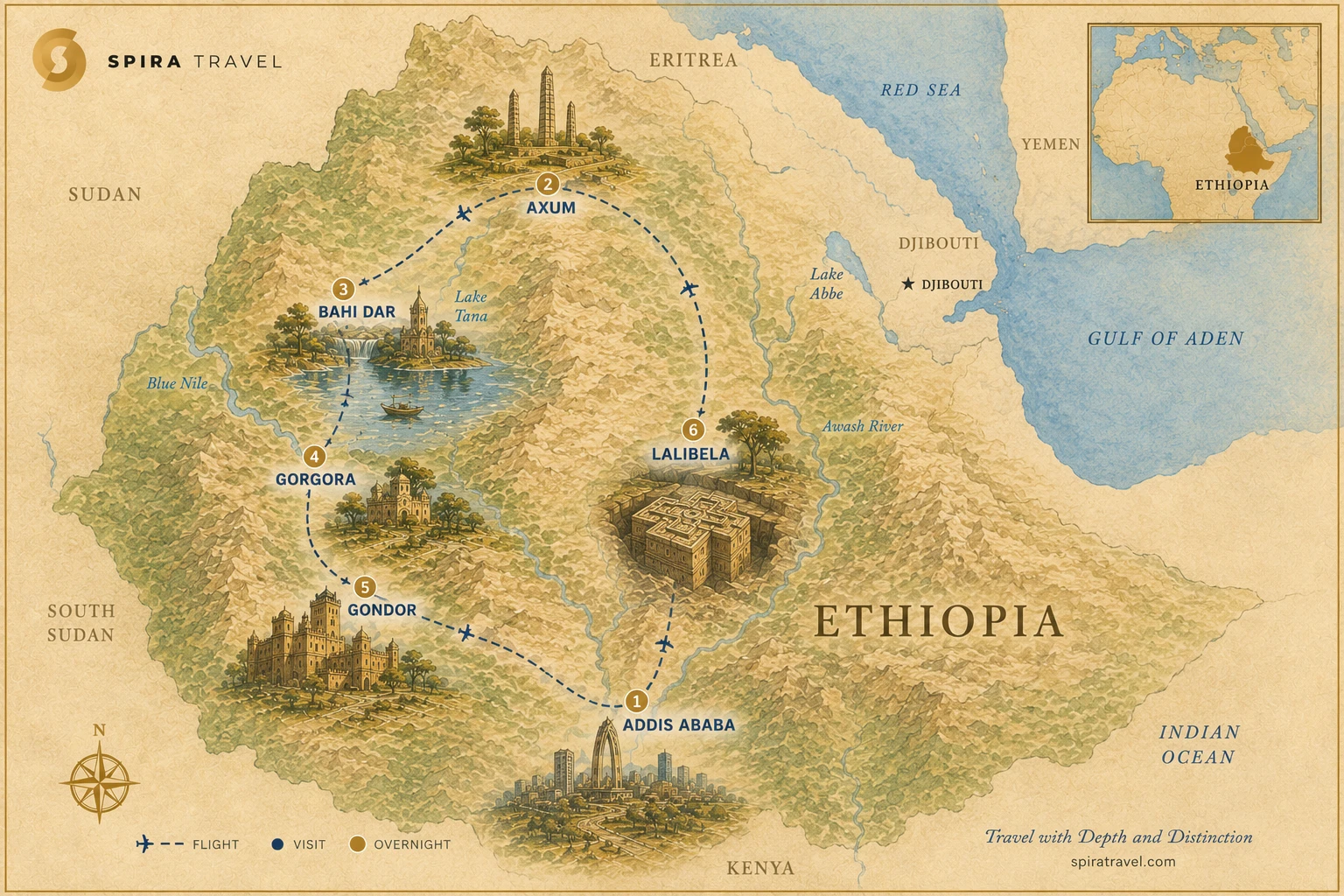
Safety Ethiopia is a large and diverse country and conditions vary by region. Spira operates exclusively in the historical and cultural heartland — Addis Ababa, Lalibela, Gondar, Axum, and the surrounding regions — where we have deep, trusted relationships on the ground. Your safety is our first consideration in every program we design. We monitor conditions continuously and will always advise you honestly.
Electricity 220V, European two-pin plugs. A universal adapter is essential. Power outages in smaller towns are not uncommon — pack a power bank and a torch. The rock-hewn churches of Lalibela are lit by candles and the occasional shaft of natural light. This is not a shortcoming. It is the point.
Time Zone Ethiopia runs on its own calendar — thirteen months, a year behind the Gregorian calendar, and a clock that starts at dawn rather than midnight. UTC+3 by international standard. But be aware that locals may tell you a time in Ethiopian hours, which are six hours different from what you expect. Your guide navigates all of this seamlessly.
Tipping Tipping is appreciated and important in Ethiopia, where service industry wages are low and tourism makes a genuine difference to livelihoods. Your guide will advise on amounts throughout. Give generously when the experience has moved you. In Ethiopia, it usually will.
One Last Thing Ethiopia is the only African country never colonized. It is the origin of coffee, the keeper of the Ark of the Covenant by its own account, and the place where some of the oldest evidence of human life on earth was found. This is not a country you visit like other countries. It recalibrates something. Travelers come back different — quieter, more grateful, more awake to what the world actually contains. Go ready to be changed. You will be.
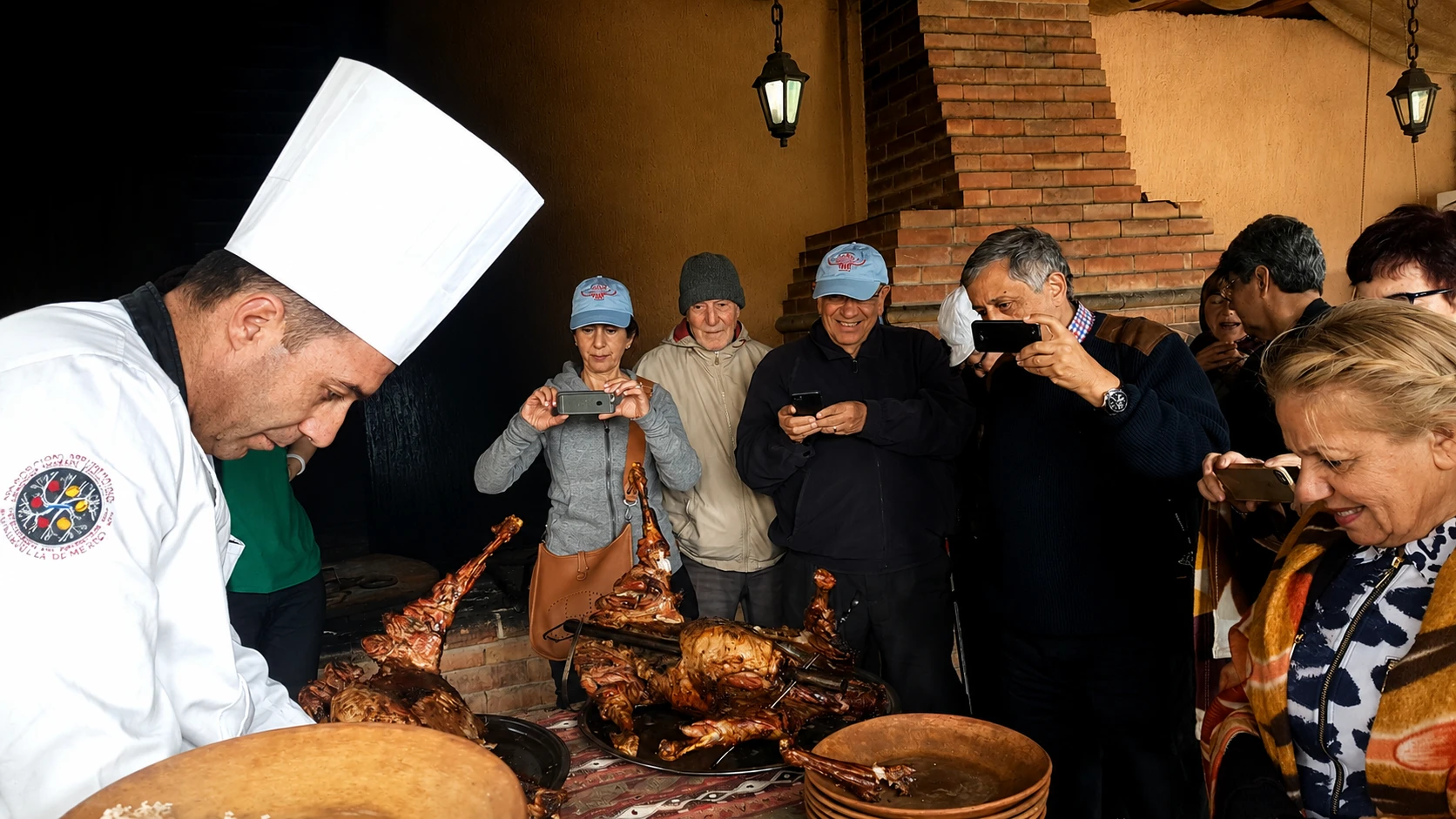
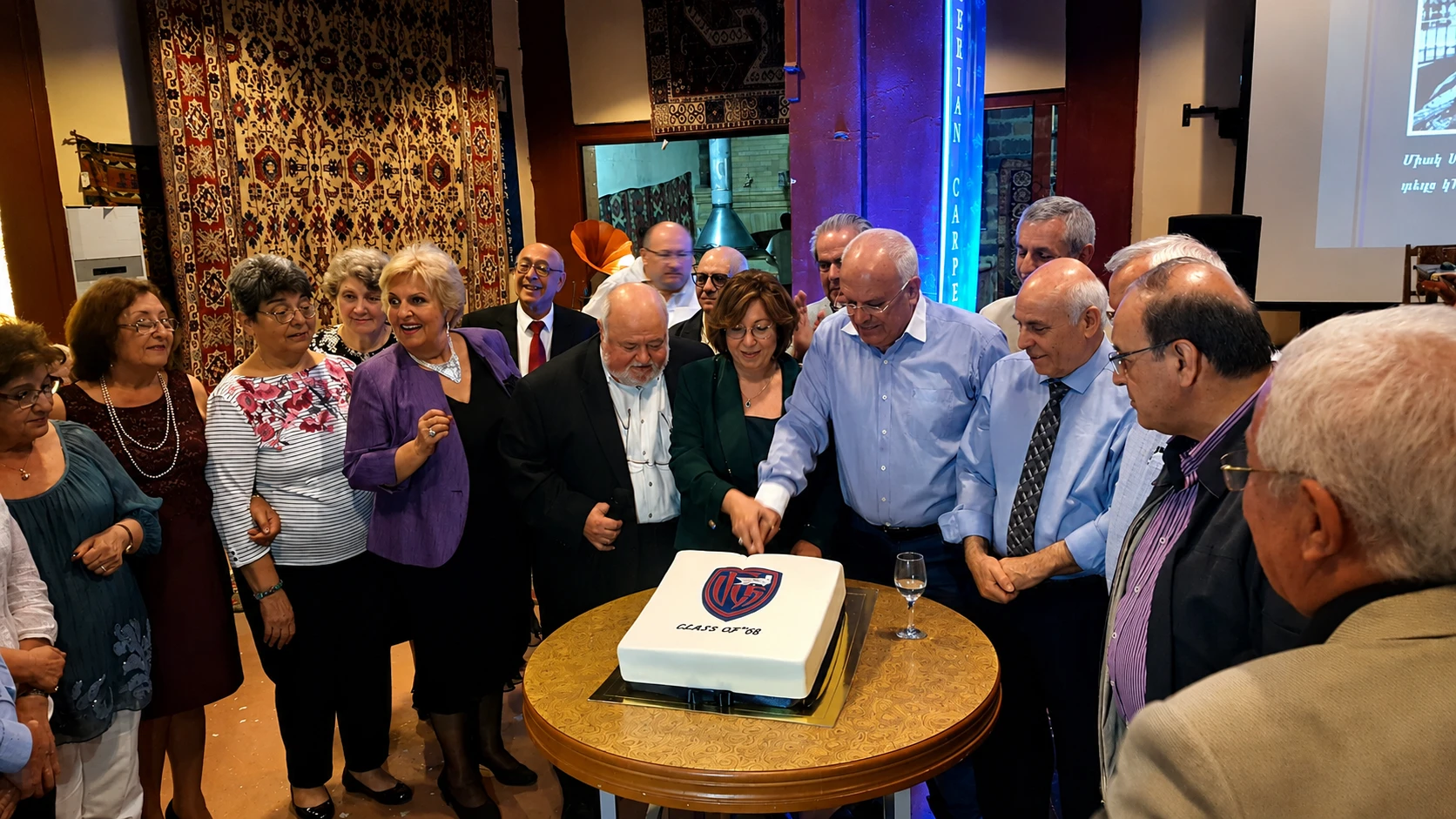
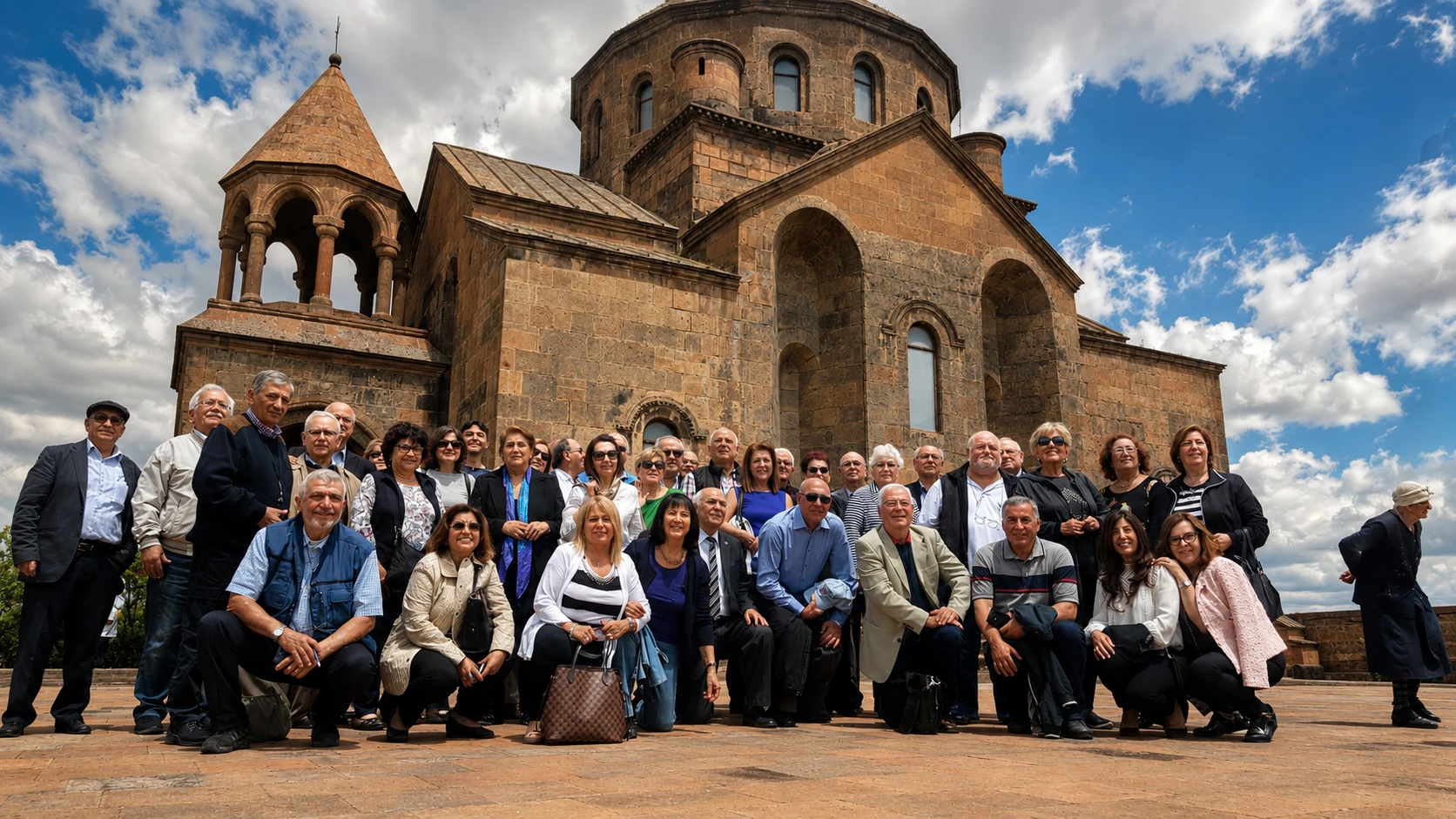
Tsaghkunk Chef House, Dolmama restaurant in Dilijan, restaurant of the “Cross of Armenian Unity” in Edjmiadzin, Dzirani restaurant-complex, Megerian Carpets, each event with a unique and exquisite live musical performance and delicious food … St. Hripsime church for a memorial for the Melkonian Educational Institute’s benefactors Krikor and Garabed Melkonian and recently deceased teachers, a visit to a school in the Ararat province where we were greeted with our beloved Melkonian’s anthem, bringing tears to our eyes, plus excursions to places of interest, a great experience very well organized and led by Sira.
This is how the class of ‘68 reunited during the week of May 11-18, 2018 to celebrate 50 years since our graduation from MEI. To top all this, moved by the prevailing warm atmosphere, Sira touched us all by gifting each graduate with a ceramic plate bearing the picture of Mt. Ararat and the symbolic pomegranate and the inscription “50 years of friendship”. Unforgettable!
I’ve traveled to Armenia with Sira and her team twice already, and both trips were absolutely perfect! Sira and her team always recommend amazing places that you won’t find in travel guides. Planning the trip was incredibly easy, and everything ran smoothly. I highly recommend Sira for anyone looking for a unique and well-organized travel experience.